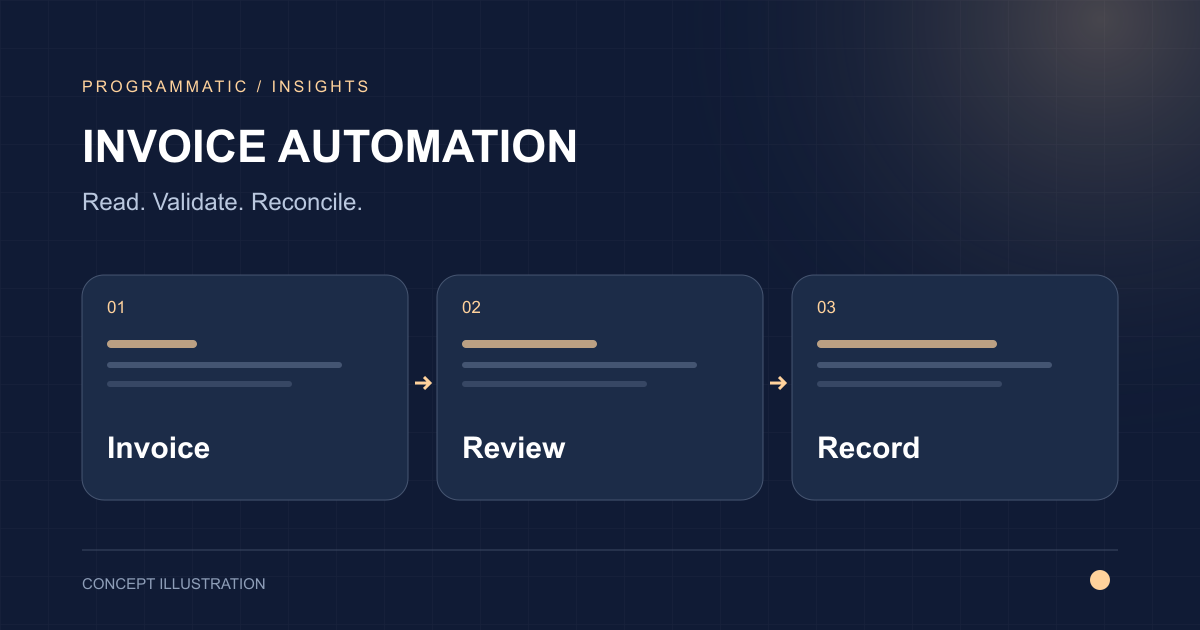
Invoice automation creates value when it removes repetitive handling without hiding exceptions. The architecture has to connect document ingestion, field extraction, validation, business rules, matching, approvals, and the finance systems that ultimately own the transaction.
Map the invoice path before choosing the model
Document the channels invoices arrive through, required fields, suppliers, formats, purchase-order rules, tax requirements, duplicate checks, approval thresholds, and the ERP or accounting destination.
Separate extraction from validation
A model may extract a value correctly from the page but the value can still be invalid for the business process. Validation should use supplier data, purchase orders, arithmetic checks, policy rules, and other system context.
Design an exception queue
Low-confidence fields, missing purchase orders, mismatches, duplicates, and policy exceptions need a review workflow that makes the reason visible and allows corrections to feed future improvement.
Integrate with finance systems carefully
Approved invoice data may need to create or update records in ERP, accounting, procurement, or payment systems. Authentication, idempotency, reconciliation, and audit logs matter as much as extraction accuracy.
Measure end-to-end processing
Track extraction quality, exception rate, review time, straight-through processing, duplicate prevention, approval time, and downstream reconciliation rather than measuring OCR accuracy alone.